Academic Session 2026 – 27
Shape your child's future with us. Enrol now for the upcoming academic year and build a strong foundation for lifelong learning.
What Is Our Teaching Methodology?
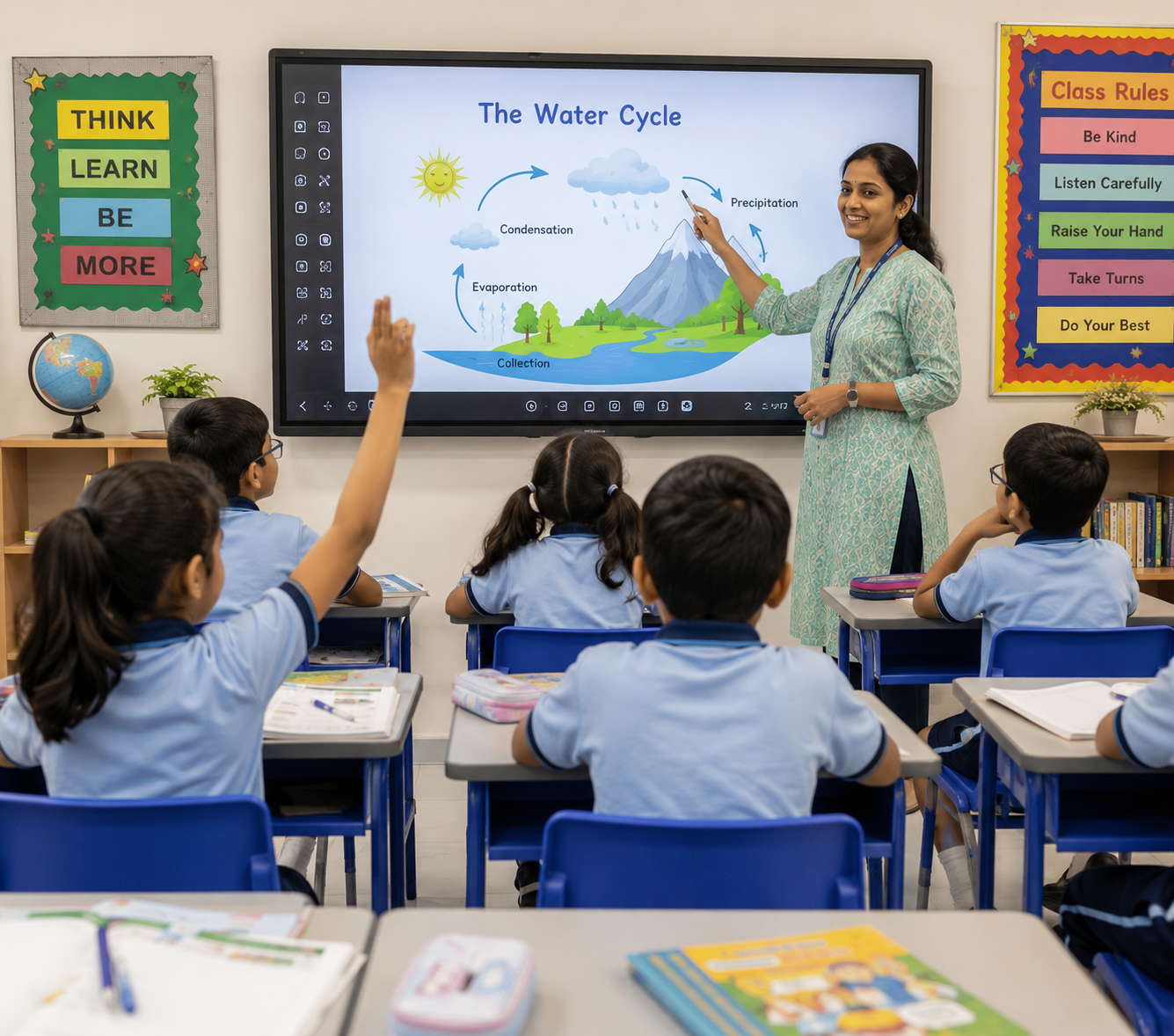
- Our teaching methodology is focused on discussions, debates, pep talks, seminars, projects, high-quality self-study, and the usage of mind maps.
- Our motto is to replace books with experiments, exams with enquiries, and homework with discussions.
RPS curriculum gives the following scopes:
Admission Inquiry
- Early registration is recommended for potential students seeking admission. If you would like to learn more about us, we conduct regular information sessions at our campus, and online open-day sessions are organized as well.
- We maintain a waiting list for students to whom we are unable to offer seats immediately; the list is updated as vacancies arise.
- You can visit us at our school campuses between 9:30 am and 2:30 pm on most working days. We recommend fixing prior appointments to avoid delays and to ensure that the school office is available on the day of your visit.
Co-Curricular Activities
RPS has designed numerous co-curricular activities that are mandatory for RPS students — because logical, analytical and creative thinking is equally important for every child.
Fine Arts
Keyboard, Guitar, Violin, Classical Dance, Western Dance, Drawing, Painting, Vocal Music, and more.
Sports
Badminton, Basketball, Football, Cricket, Table Tennis, Carrom, Chess, Swimming, Martial Arts, and more.
Nurturing Young Minds from Early Childhood
to High-School Graduation
Fostering holistic growth & joyful learning experiences for children at every stage.
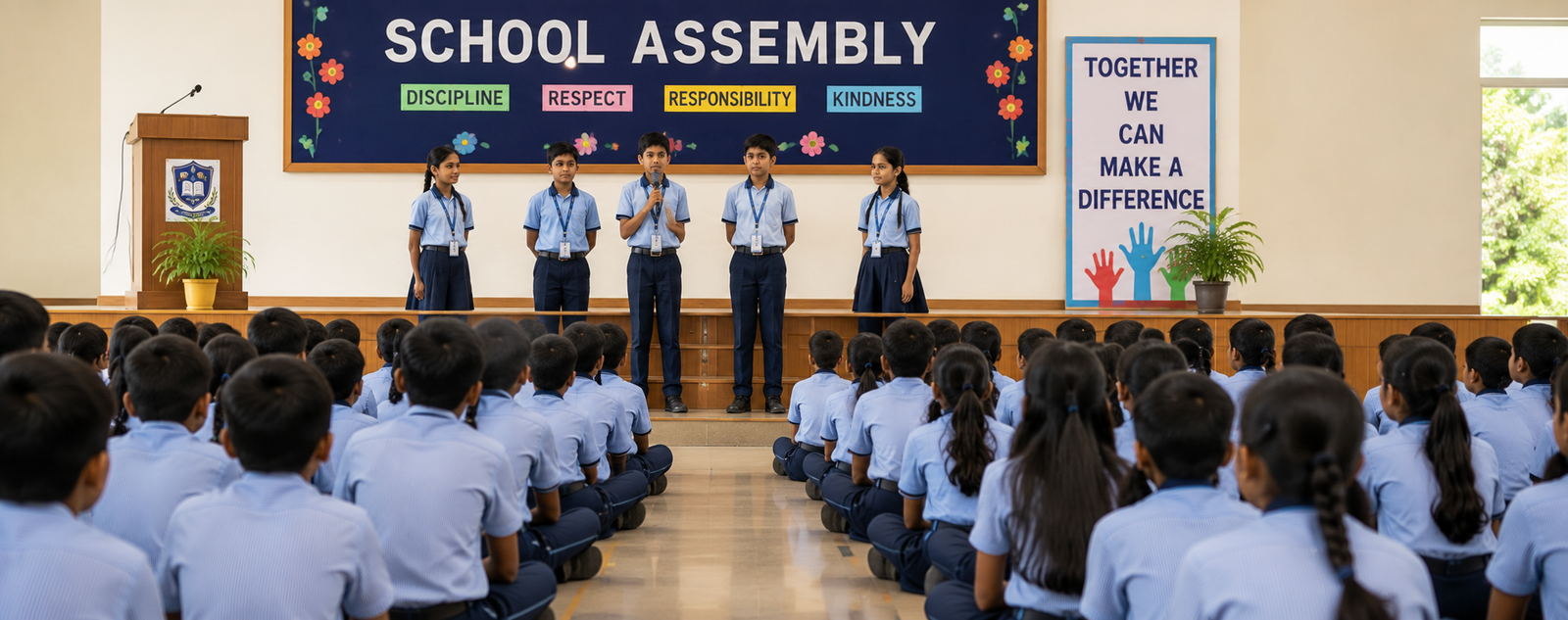
Senior Secondary · Grade 9 – 12
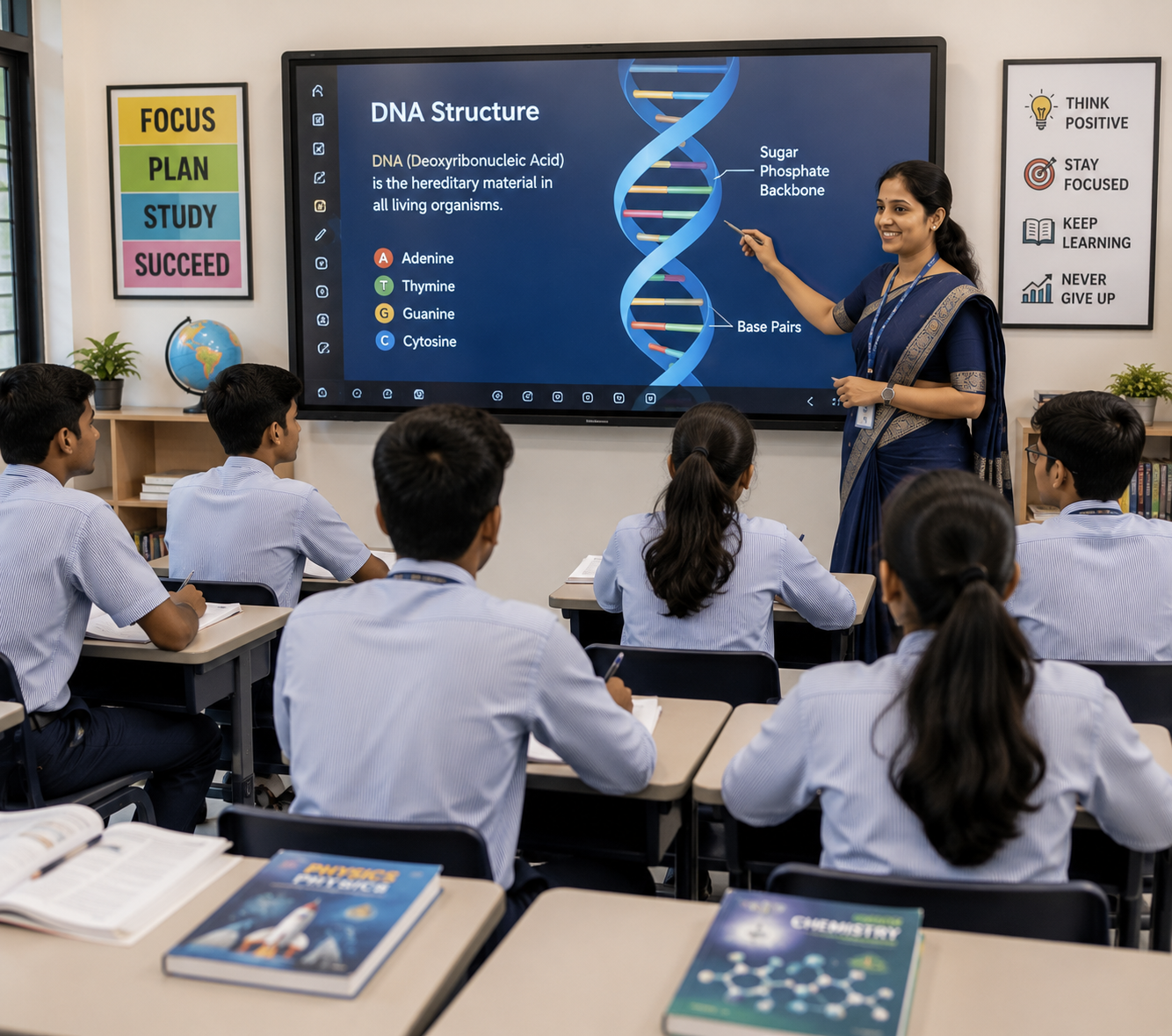
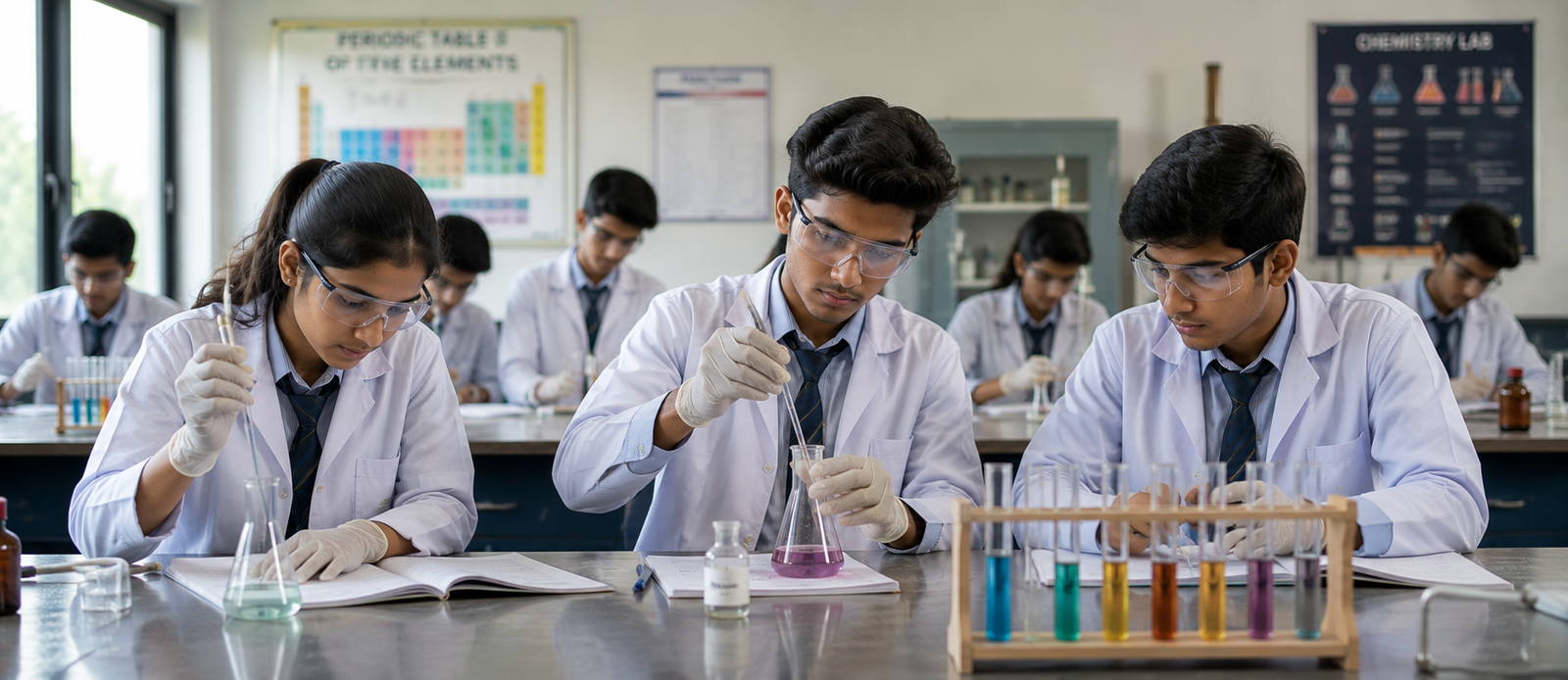
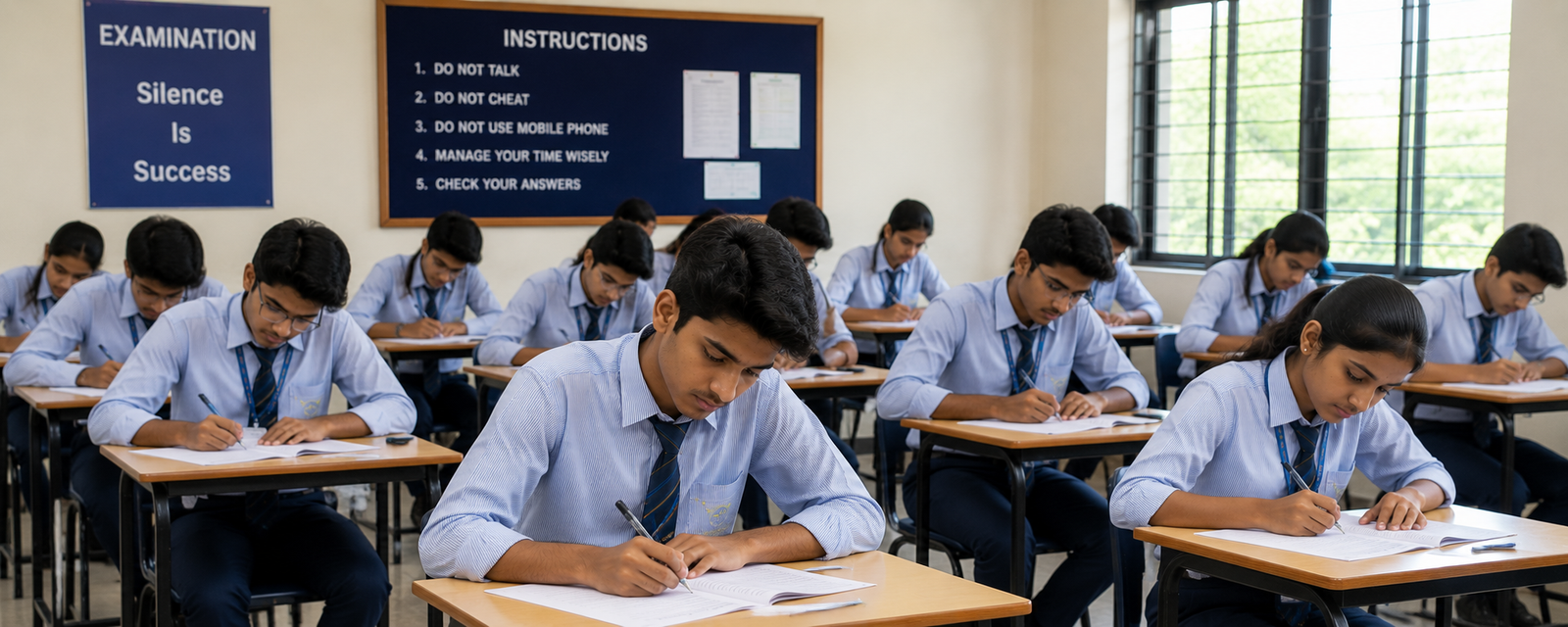
In the High School years, encompassing Grades 9 to 12 and following the NCERT syllabus, our curriculum is designed to provide a comprehensive and rigorous academic foundation. Aligned with NCERT guidelines, our program ensures depth of understanding in core subjects such as mathematics, science, social sciences and languages — structured to prepare students for national-level examinations through research-backed teaching that emphasizes critical thinking, analytical skills and practical application.
- Advanced Academics
- Independence & Self-Management
- Specialized Knowledge
- Effective Communication
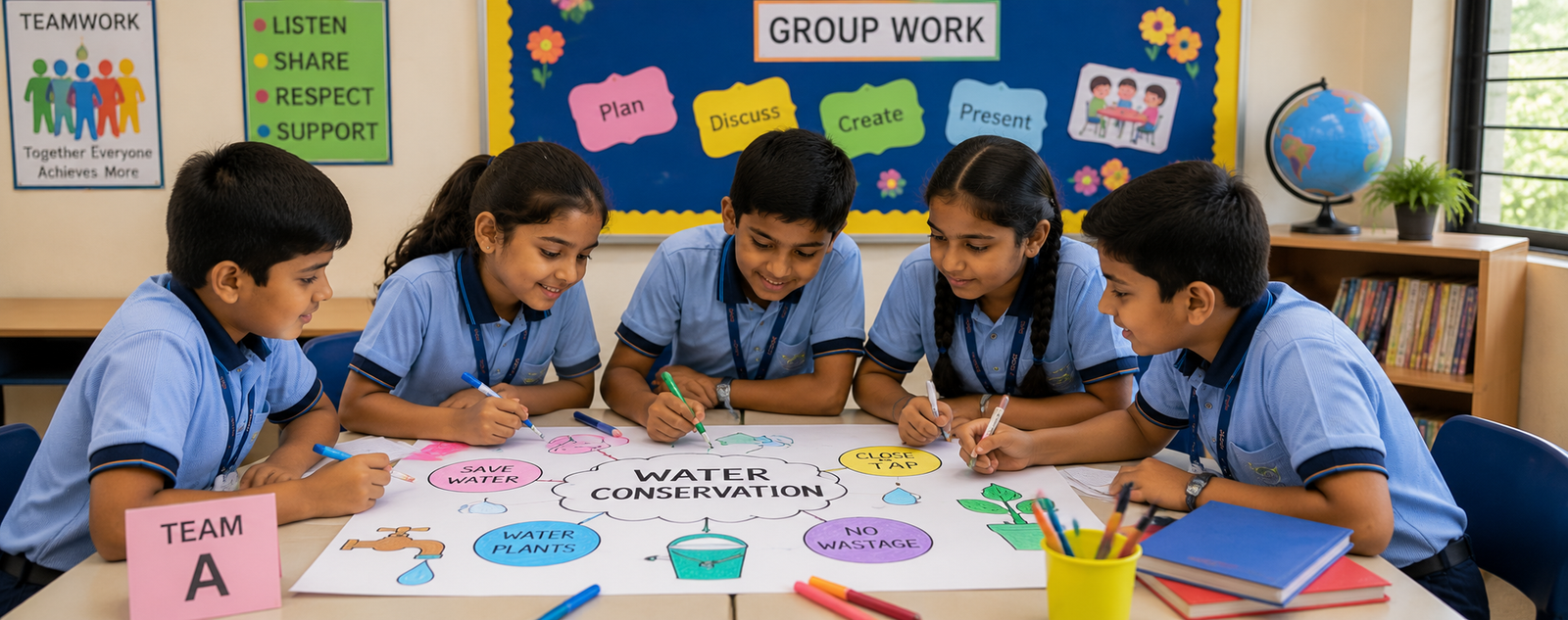
Middle School · Grade 6 – 8
In the dynamic Middle School years, spanning Grades 6 to 8, our holistic curriculum is meticulously crafted to guide students through a transformative educational journey. Rooted in academic excellence, our program emphasizes subject-specific knowledge while fostering critical thinking, collaboration and independent inquiry — with project-based learning, real-world applications and collaborative projects that cater to diverse interests and learning styles.
- Advanced Academics
- Organizational Studies
- Communication & Collaboration
- Digital Literacy
Preparatory Stage · Grade 3 – 5
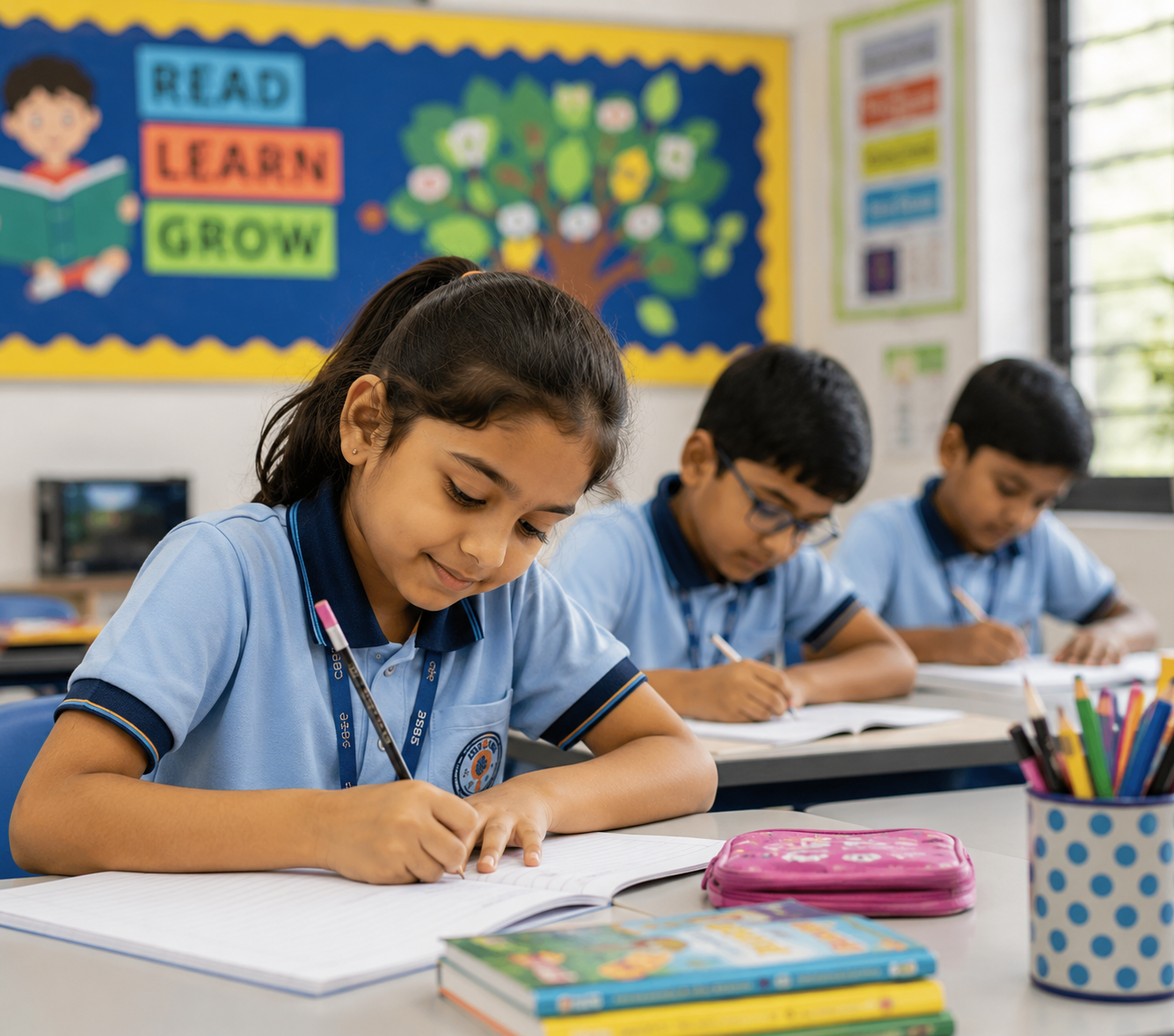
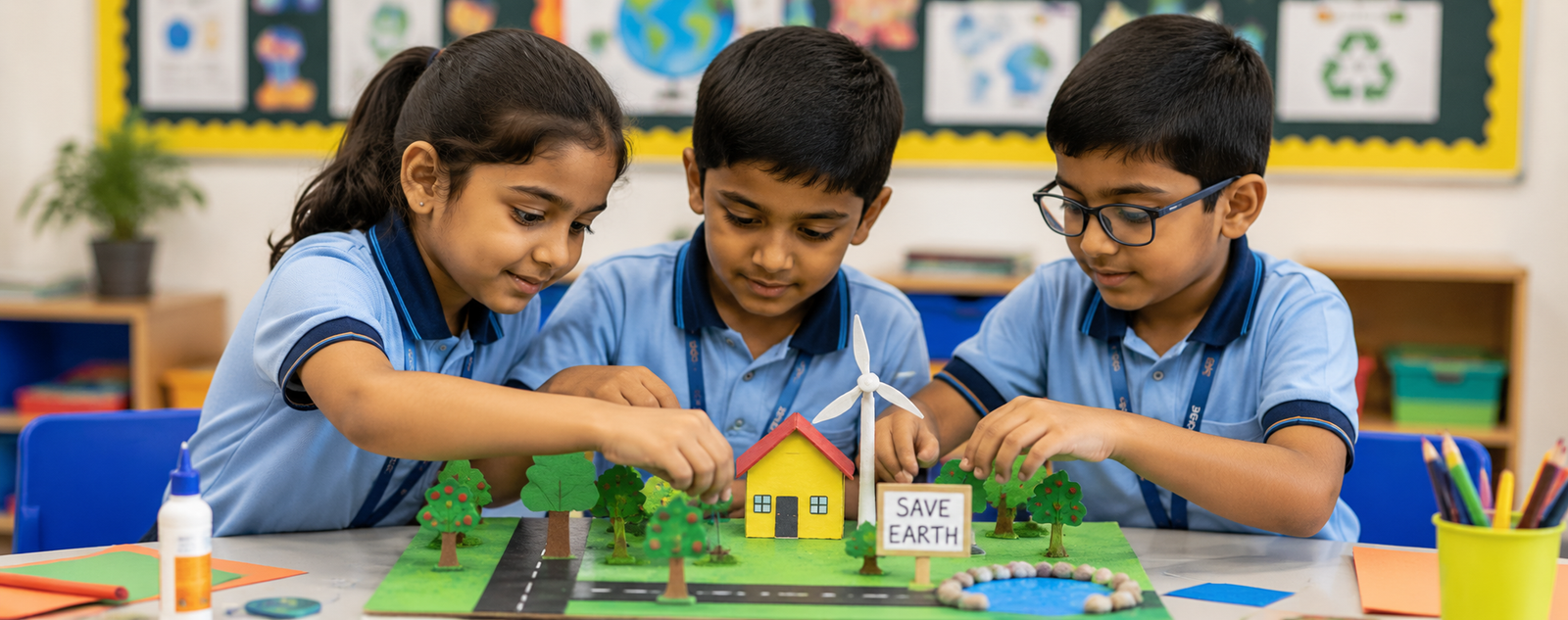
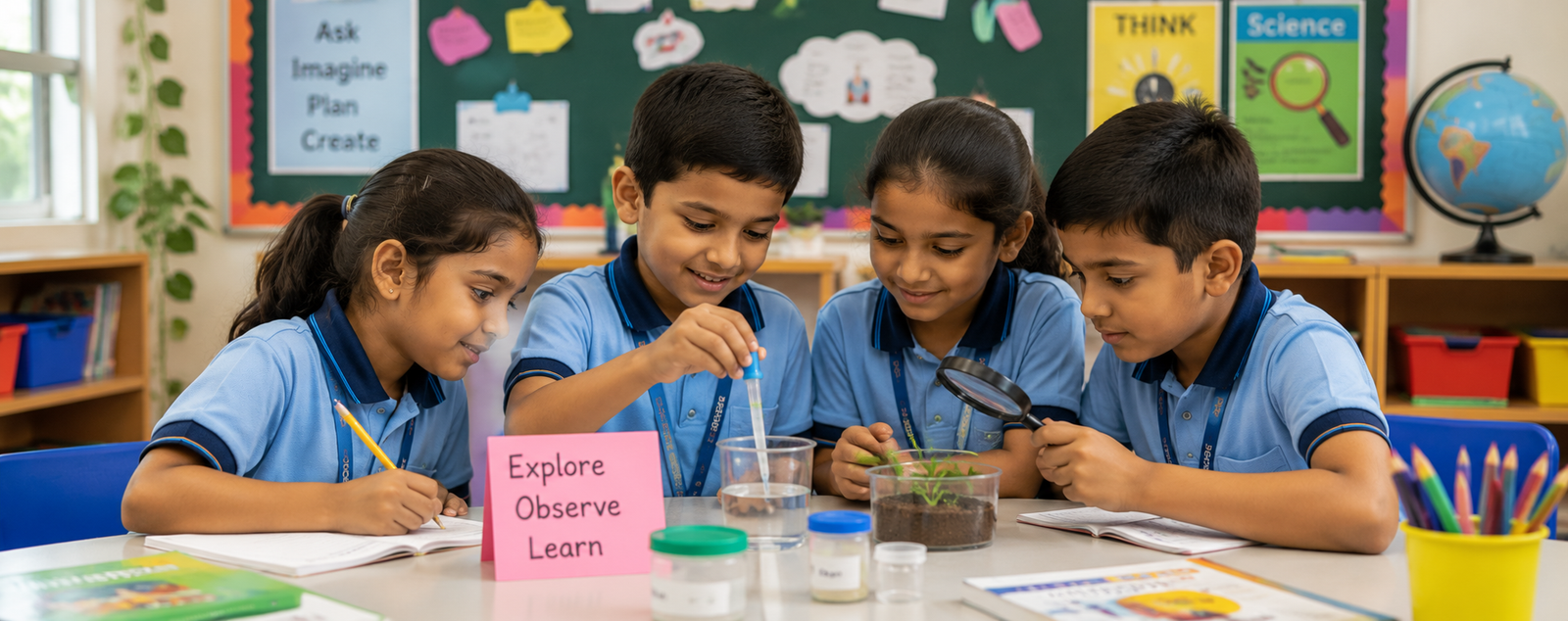
In the Preparatory Stage, encompassing Grades 3 to 5, our holistic curriculum builds upon the foundational skills acquired in the earlier years, fostering a more advanced and comprehensive learning experience. Emphasizing a student-centered approach, we develop critical thinking, problem-solving and effective communication — going beyond traditional subject boundaries with interdisciplinary projects and a robust focus on literacy and numeracy.
- Advanced Literacy
- Mathematical Proficiency
- Social & Emotional Growth
- Critical Thinking & Inquiry
Foundation Stage · Nursery – Grade 2
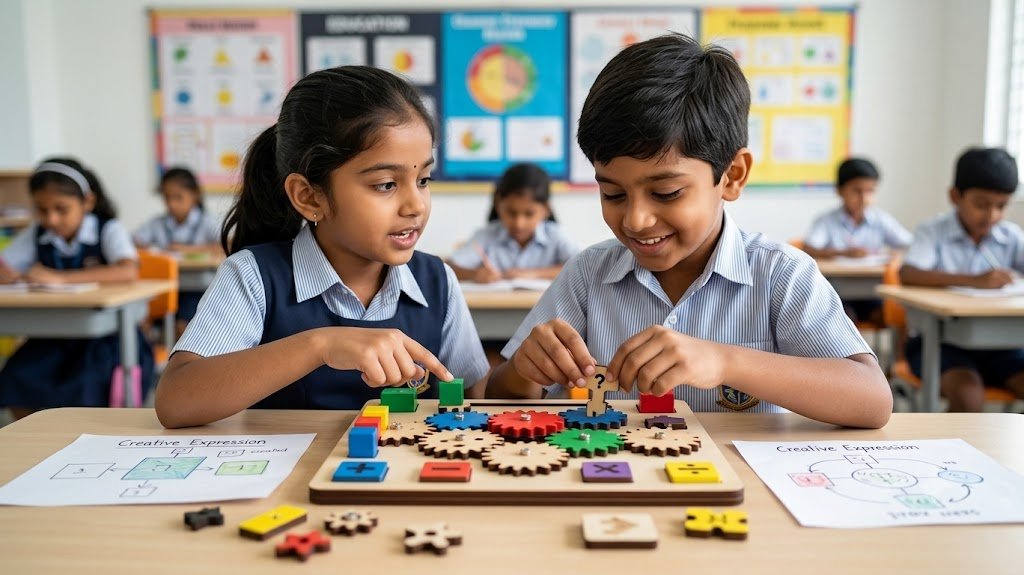
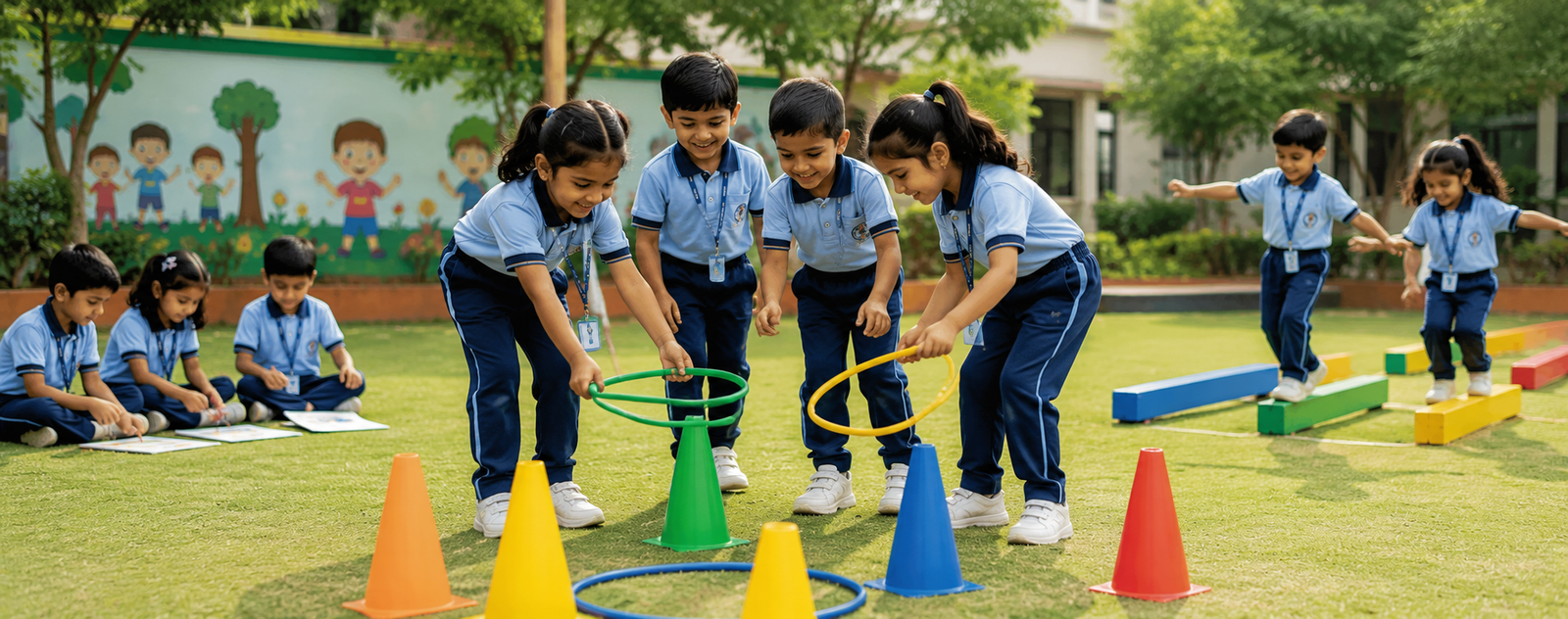
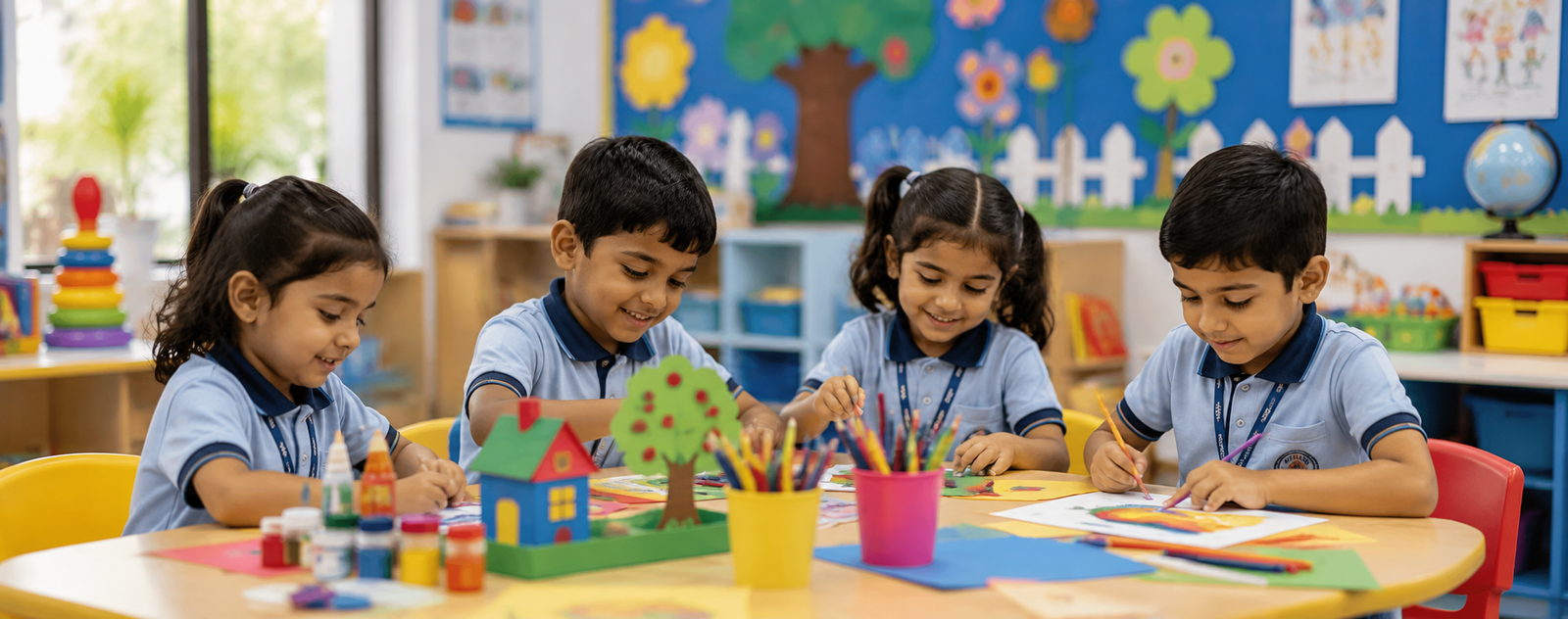
In the Foundation Stage, encompassing Nursery through Grade 2, our holistic curriculum is thoughtfully designed to provide a well-rounded and developmentally appropriate learning experience for young minds. Focused on fostering intellectual, social, emotional and physical growth, our program integrates play-based learning, hands-on activities and interactive experiences — with language development, numeracy skills and creative expression seamlessly woven into a balanced, engaging educational journey.
- Literacy
- Numeracy
- Social & Emotional Development
- Physical Development
Nurturing Every Dimension
Each child is unique and is treated differently. One method of guiding and disciplining may work for one child but not another. When your child socialises in a safe, positive, and nurturing environment, it aids in enhancing:
Our Guidance & Discipline Philosophy
We believe that children should be treated with respect and that the child's self-image is the most important part of the learning process. Children need to perceive themselves as worthwhile, capable and significant; therefore their experiences should be positive and reinforcing. By allowing such experiences to occur, they develop self-confidence and high self-esteem. It is also important that we, as caregivers, communicate acceptance and allow a child to develop a sense of belonging.
Children must be allowed to make mistakes — this is all part of the learning process. As caregivers, it is our responsibility to listen to and acknowledge children's feelings and frustrations, and to offer calm, positive guidance when situations arise. Developmentally appropriate expectations and limits are set. One must remember to be firm and to be kind, while looking at what the "real" problem is. Under no circumstance do we physically or emotionally abuse a child.
Structure of Support by RPS
The institutional life of young people is interesting and successful only when there is purpose and integrity associated with education. At RPS, we channel students and resources by emphasizing twin objectives.
Language skills, Environmental study, and Numeric Talent.
- Responsive classrooms — manners, discipline, ethics.
- Culture-cohesive group — more effective in enhancing individual performance and group productivity.
- Leaders of tomorrow — evolving children into culturally civilised and compassionate human beings.
Children are naturally curious. They love to explore, experiment, discover, touch and ask questions. We teach them in a manner that hooks into this natural desire to learn, using methods that encourage — rather than dampen — children's enthusiasm.